7-OH vs Pseudoindoxyl: Complete Alkaloid Comparison
Understanding the two most potent kratom-derived alkaloids - their differences in potency, receptor binding, metabolism, and practical applications.
7-Hydroxymitragynine
Natural Kratom Alkaloid
- 13-46x more potent than mitragynine
- Natural metabolite in kratom
- Partial mu-opioid receptor agonist
- Available in commercial products
- Higher dependency potential
Mitragynine Pseudoindoxyl
Oxidized Metabolite
- Potentially stronger than 7-OH
- Forms via UV light oxidation
- Full mu-opioid receptor agonist
- Not commercially available
- Limited human research
Head-to-Head Comparison
| Factor | 7-OH | Pseudoindoxyl |
|---|---|---|
| Relative Potency | 13-46x mitragynine | ~100x mitragynine |
| Receptor Activity | Partial agonist | Full agonist |
| Natural Occurrence | 0.01-0.04% in leaf | Trace/UV-formed |
| Duration | 4-6 hours | Unknown |
| Commercial Availability | Yes | No |
| Research Status | Moderate | Limited |
| Respiratory Depression Risk | Lower | Higher (theoretical) |
What is 7-Hydroxymitragynine (7-OH)?
7-Hydroxymitragynine (7-OH) is a naturally occurring alkaloid found in the kratom plant (Mitragyna speciosa). Despite representing only 0.01-0.04% of the total alkaloid content in kratom leaves, 7-OH is considered the primary contributor to kratom's potent analgesic effects due to its significantly higher binding affinity for mu-opioid receptors compared to mitragynine.
Research has shown that 7-OH is 13 to 46 times more potent than mitragynine in producing analgesic effects. Importantly, 7-OH acts as a partial agonist at the mu-opioid receptor, which may explain why kratom and 7-OH products appear to have a ceiling effect on respiratory depression - potentially making them safer than traditional full-agonist opioids.
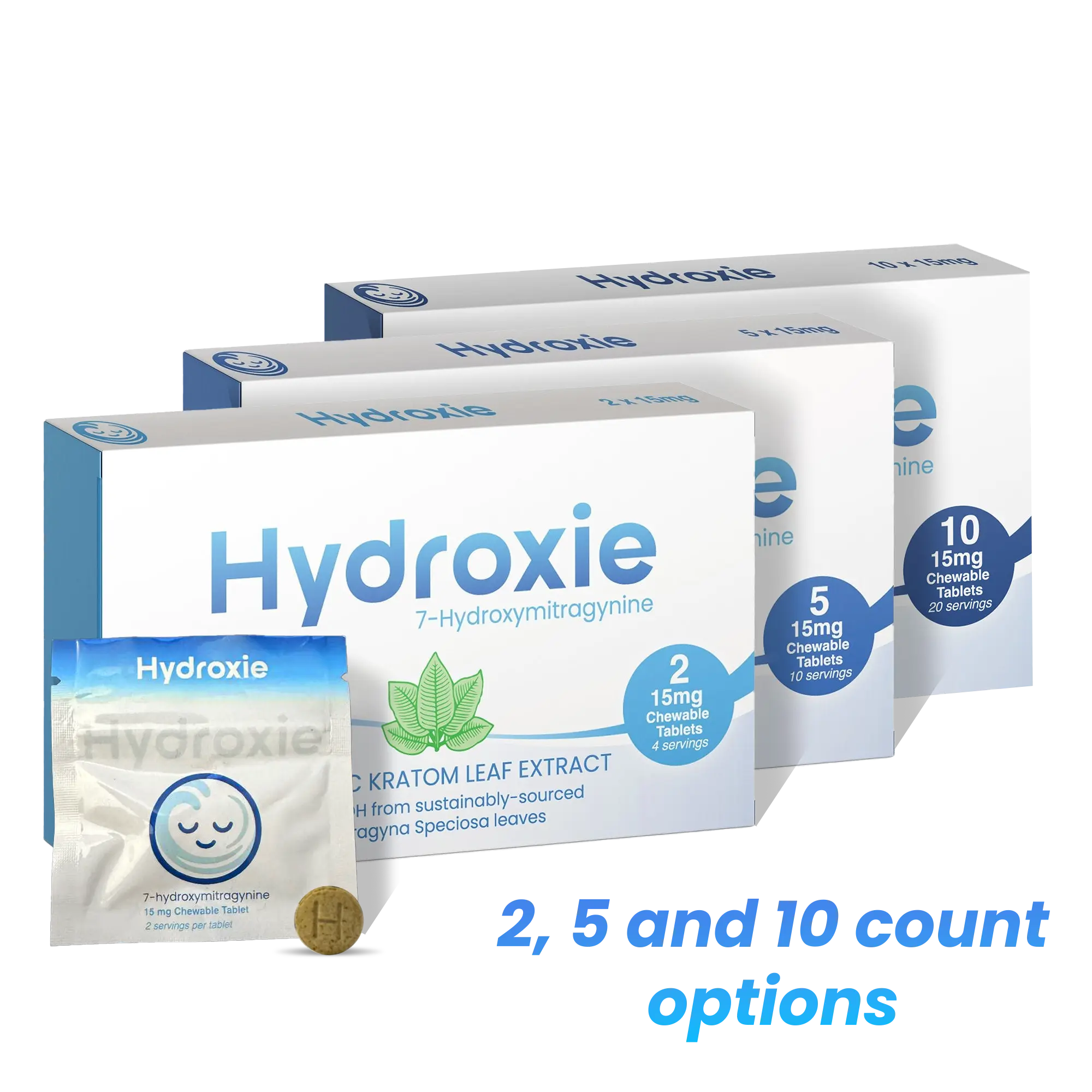
7-OH is now commercially available in various forms including tablets, shots, and extracts. These products have gained popularity among those seeking more predictable, potent effects compared to raw kratom leaf.
What is Mitragynine Pseudoindoxyl (MP)?
Mitragynine pseudoindoxyl (MP) is an oxidized derivative of mitragynine that forms when kratom is exposed to UV light or certain oxidizing conditions. Unlike 7-OH, MP is not typically found in significant quantities in fresh kratom leaves but can form during storage, processing, or intentional chemical conversion.
What makes MP particularly interesting - and concerning - is that it acts as a full agonist at the mu-opioid receptor, similar to traditional opioids like morphine. Studies suggest MP may be even more potent than 7-OH, with some research indicating potency approximately 100 times that of mitragynine.
The full-agonist activity of MP means it could potentially cause dose-dependent respiratory depression similar to classical opioids, unlike the partial-agonist 7-OH. This is a critical safety distinction that researchers are still investigating.
Key Pharmacological Differences
Receptor Binding Profile
7-OH is a partial agonist, meaning it activates mu-opioid receptors but has an intrinsic ceiling on its effects. MP is a full agonist with no such ceiling, potentially leading to more dangerous dose-response curves at high doses.
Safety Margin
The partial-agonist nature of 7-OH may provide a wider safety margin, as effects plateau rather than continuing to increase with dose. MP's full-agonist activity could theoretically produce dangerous respiratory depression at high doses.
Formation Pathway
7-OH forms naturally in the kratom plant through biosynthesis. MP forms through oxidation (UV/oxygen exposure), meaning poorly stored kratom products could contain higher MP levels, potentially altering their safety profile.
Research Status
7-OH has been more extensively studied in both animal and human contexts. MP research is primarily limited to in vitro and animal studies, with very little data on human pharmacokinetics or safety.
Important Safety Information
Both 7-OH and mitragynine pseudoindoxyl are potent opioid receptor agonists. While 7-OH's partial-agonist profile may offer some safety advantages, neither compound is without risk.
- Never combine with other opioids, benzodiazepines, or CNS depressants
- Start with the lowest possible dose when trying any new product
- Purchase only from vendors who provide third-party lab testing
- Be aware that tolerance develops with regular use
- Seek medical help if you experience respiratory depression
The Verdict
For consumers, 7-OH is the clear practical choice due to its commercial availability, more extensive research, and potentially safer partial-agonist profile. Products containing standardized 7-OH offer more predictable dosing and effects compared to raw kratom.
Mitragynine pseudoindoxyl remains primarily of academic interest. Its full-agonist activity and extreme potency make it a subject of research concern rather than a viable consumer product. If anything, consumers should be aware that improperly stored kratom could contain elevated MP levels, which is another reason to buy from reputable vendors with proper storage and testing protocols.
Shop 7-OH Products
Browse lab-tested 7-hydroxymitragynine products from trusted vendors

Kream Ohmz 7OH Pseudo Chewable Tablets Mint 60mg

7 Star 7-OH Extract Chewable Tablets S'mores 30mg

Zana Seven 7-OH Chewable Tablets

Kratom Kulture 7OHMS Platinum Chewable Tablets Blue Razz Cotton Candy
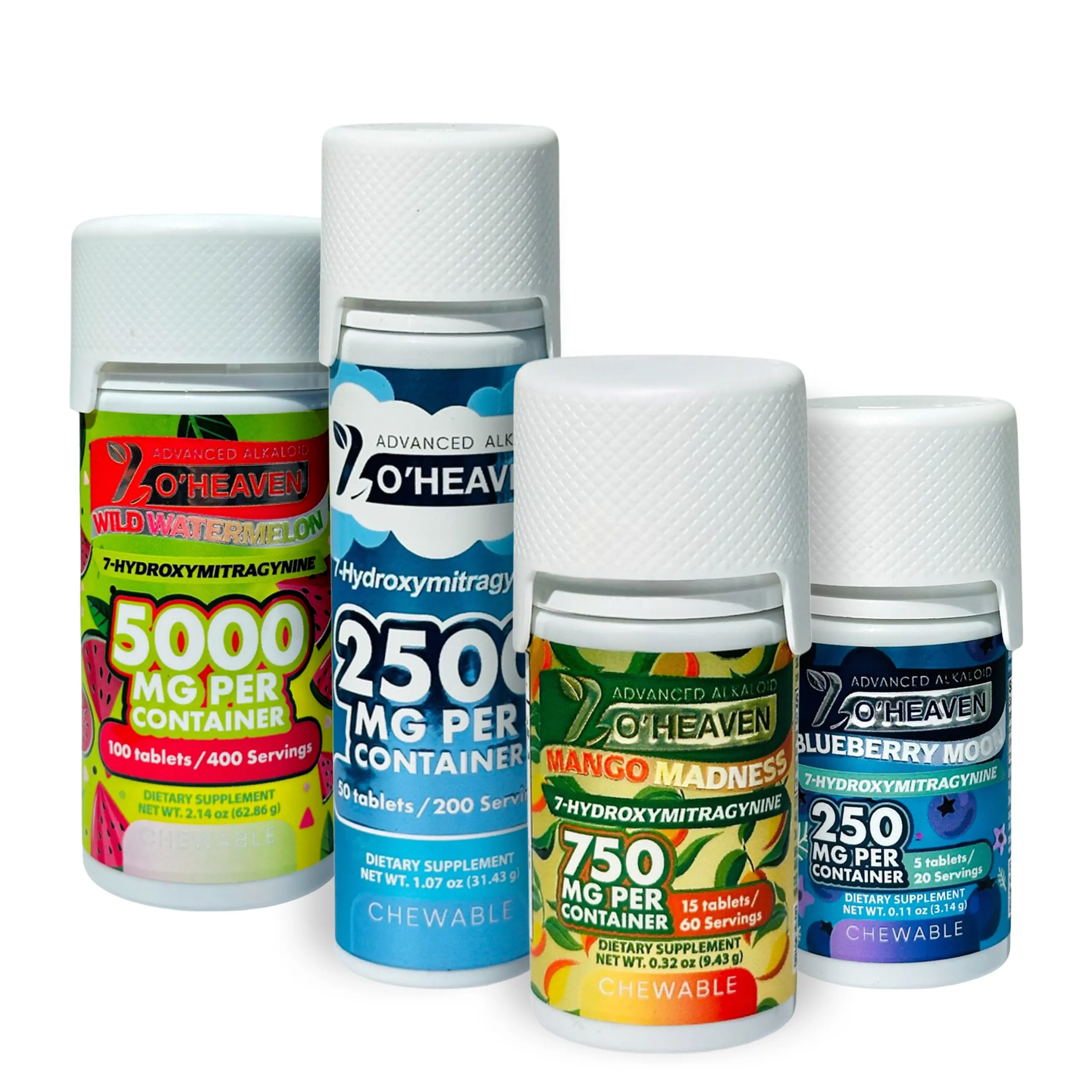
7 O'Heaven 7 Hydroxymitragynine Kratom Leaf Extract Chewable Tablets